
Microservices Architecture
Decoupled, Resilient & Independently Scalable Distributed Systems
Break monolith boundaries. We help growing enterprises decompose complex monolithic applications into resilient, domain-driven microservices that can be deployed, scaled, and maintained independently without risk to the core ecosystem.
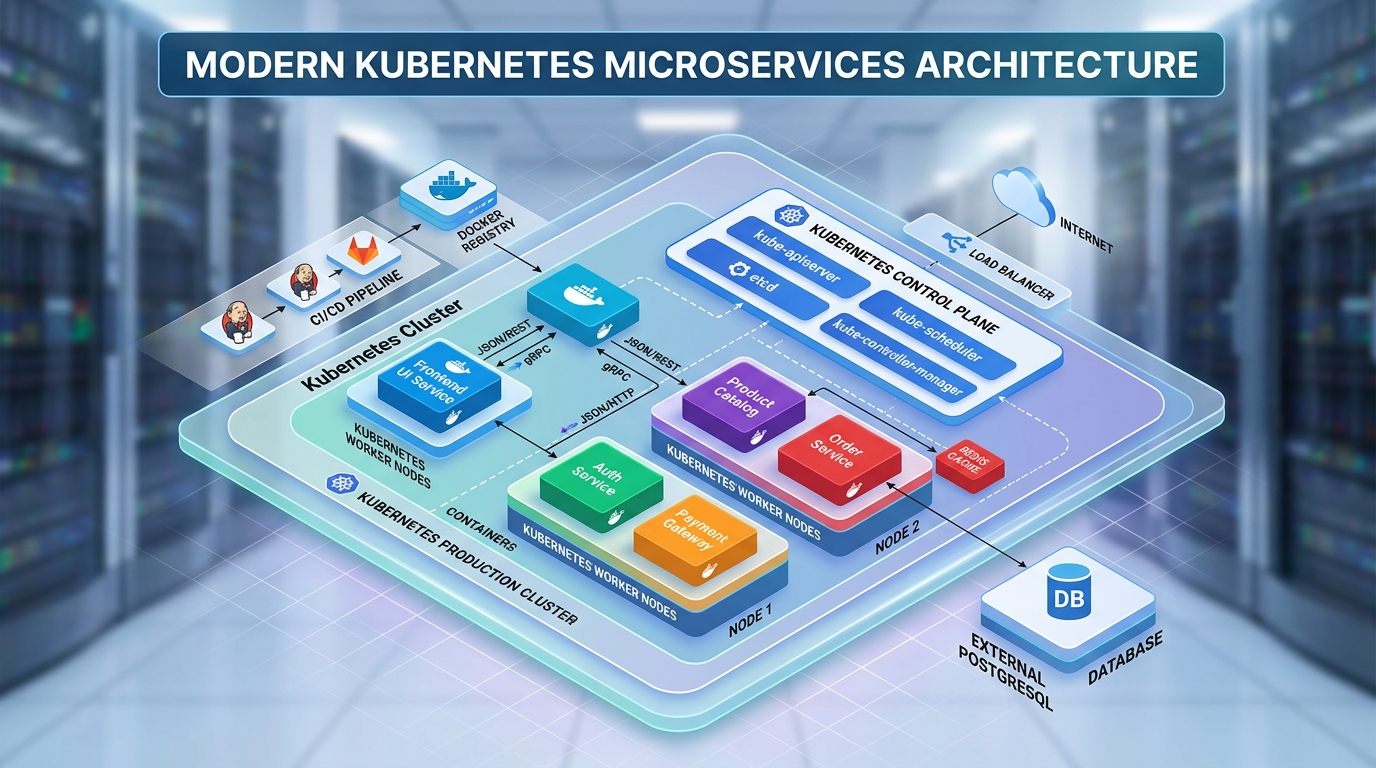
Core Technical Capabilities
We build custom solutions focused on performance, modular maintainability, and enterprise data security.
Domain-Driven Design (DDD)
Map distinct business domains (Billing, Inventory, Users) into loosely coupled service boundaries.
Asynchronous Event-Driven Messaging
Decouple service interactions using RabbitMQ, Apache Kafka, or Redis Pub/Sub for resilient background processing.
API Gateway & Service Mesh Routing
Centralized ingress routing, SSL termination, and request load balancing across microservice pods.
Circuit Breaker & Fault Isolation
Prevent cascading system outages with automated circuit breakers and graceful fallback strategies.
Containerized Kubernetes Deployment
Dockerized container images managed via Kubernetes horizontal pod autoscalers.
Distributed Tracing & Telemetry
End-to-end request tracing across microservices using OpenTelemetry, Prometheus, and Grafana.
Engineered with Modern, Production-Tested Tech Stacks
Our engineering team utilizes strict property promotion, automated testing pipelines, microservices patterns, and enterprise cloud infrastructure.
verified_user Business Outcomes & ROI
- check_circle Deploy updates to individual services without restarting the entire system.
- check_circle Independent horizontal scaling based on specific service workload spikes.
- check_circle Improved fault tolerance: a failure in one service does not crash the app.
- check_circle Enables specialized engineering teams to work in parallel on separate services.
GoFineDine High-Concurrency KDS & Billing Sync
Refactored fine dining POS architecture into independent billing, kitchen ticket, and inventory event workers.
Frequently Asked Questions
Common inquiries regarding our microservices architecture process.
Q1 When should a business migrate from a monolith to microservices?
Microservices are recommended when your application experiences distinct scaling bottlenecks, slow deployment cycles due to large codebase size, or requires separate engineering teams working independently.
Q2 How do microservices communicate securely with each other?
Services communicate via internal gRPC protocols or lightweight HTTP REST APIs secured with mTLS certificates inside a private virtual cloud (VPC).
Q3 Will microservices complicate DevOps and monitoring?
We mitigate complexity by setting up automated CI/CD deployment scripts and centralized OpenTelemetry monitoring dashboards.
Ready to Build Your Microservices Architecture Solution?
Consult directly with our senior software architects. Fill out your project scope below to receive a comprehensive technical proposal, estimation, and architecture blueprint.
Request Free Technical Estimate
No category selection required—your request is pre-bound directly to Microservices Architecture.